
4 Essential Platforms for Safeguarding Academic Integrity


Contributors:
 Fact Checked
 UniversityBusiness Promise
 Expert Verified
Scholarly publishing is rapidly evolving in response to developments in digital technologies. While these advancements present ample opportunities for research writers, research institutions and universities must remain vigilant in upholding academic honesty and the value and credibility of these works. Where can you find the best tools for monitoring research integrity? These four platforms are worth your consideration.
1. Dimensions Author Check
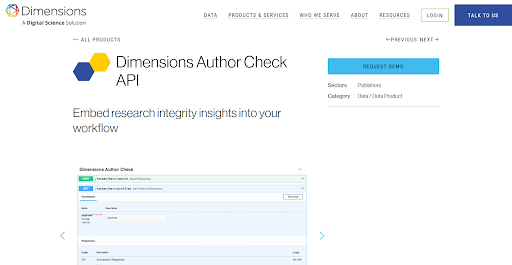
In an era when research integrity is paramount, Dimensions Author Check provides the tools to verify accuracy and trustworthiness. This solution is highly flexible and seamlessly integrates into your university’s workflows, automating the manual review of publications for correctness and compliance.
It provides a comprehensive perspective by cross-referencing works against the most extensive collection of interlinked research data worldwide, while utilising an intuitive dashboard that streamlines author verification. Dimensions delivers real-time risk detection, occurring retractions, authorship concerns and paper mill indicators for every submission. Its generative artificial intelligence (AI) tools enable researchers to receive fast answers on publicly available data, accelerate research with subscription-based materials and customise queries however they need them.
Key Features
- Comprehensive authorship validation
- Real-time risk assessment
- Seamless integration into existing research management systems
- Evidence-based reporting and transparency
2. Elsevier
Elsevier is a global leader in scientific research and analytics, offering a comprehensive suite of research integrity tools to help you adhere to the ethical standards of literary journals. It leverages advanced technology against its vast science and health collection to detect plagiarism, screen for data manipulation errors and confirm author identities.
In addition to ample resources regarding research integrity, Elsevier’s proprietary tool Crossref Similarity Check — powered by iThenticate — compares manuscripts to a global database to guarantee originality. It also utilises various AI solutions to alert to duplications, inconsistencies, and manipulated data and figures. A qualified integrity expert reviews all instances for optimal assurance.
Key Features
- Utilises the iThenticate plagiarism checker to automate screenings of all submissions
- Employs AI-driven image and data forensics
- Integrates author identity and affiliation verification
- Prioritises human oversight of flagged issues
3. Turnitin
Turnitin delivers academic and research integrity solutions and is trusted by universities and publishers worldwide. It offers a suite of tools that check for plagiarism, AI content and text likenesses, seamlessly merging with your institution’s workflows. This vendor has access to one of the world’s largest databases of scholarly work, student papers and web sources to ensure accuracy in detecting duplication and manipulated materials.
Some of its most popular products include Turnitin Feedback Studio, Gradescope and iThenticate, which enable a more seamless review, feedback and screening process. It deploys AI-powered systems that can differentiate between human- and machine-generated content and can integrate with various learning management systems.
Key Features
- Offers various products to help detect integrity risks
- Compares submission to a vast, global database of scholarly work, publications and internet content
- Delivers seamless integrations and workflow automation
- Offers detailed reporting and actionable feedback capabilities
4. Clarivate
Clarivate is emerging as one of the best tools for monitoring research integrity across academic institutions. Its Web of Science and partnership with The Center for Scientific Integrity — parent company of Retraction Watch — deliver robust safeguards to help researchers and facilities foster scholarly precision and honesty.
The EndNote reference management software scans personal libraries and flags retracted publications in real time, alerting parties to reasons for retraction and providing links to the original notices. The features encourage researchers to think twice before using unreliable material and home in on more factual evidence. This further supports the publication of responsible and trustworthy information.
Key Features
- Labels and notifies researchers about retracted publications and concerning editorials
- Indexes articles by correctness and whether they have been corrected or withdrawn
- Partners with Retraction Watch to deploy EndNote
- Optimises in-workflow notifications and filters to enhance reliability
Choosing the Best Tools for Monitoring Research Integrity
Selecting the best tools for monitoring research integrity in higher education requires you to consider specific technical, functional and policy-centred criteria, such as the following.
Scope and Depth of Integrity Reviews
Tools should easily identify plagiarism, text manipulation, duplicate submissions, image or data falsification, and authorship concerns. It must also be able to detect work generated by artificial intelligence. Verify that it screens content across online journals and databases and delivers accurate results.
Integration and Interoperability
Solutions must be integratable into your Learning Management System, submission portals and institutional repositories. They should also deliver strong APIs for customized workflows and data sharing and be minimally disruptive to users.
Transparency, Reporting and Remediation
The programs should distinguish between minor text matches and serious misconduct. It should store detailed records for compliance and auditing and have guidelines in place for handling breaches.
Compliance and Security
Ensure that the system is compliant with U.K. or European Union data privacy laws. Find out how it stores and processes institutional and user information. Also, determine whether it aligns with your university’s integrity and academic misconduct policies.
Scalability and Reliability
The tools should be capable of handling the demands of large-scale institutions and staff, with a reliable uptime and consistent rollout of updates and user-driven innovation.
User Training and Support
Verify if the vendor provides high-quality training resources and comprehensive onboarding support. Many have a network of universities to share updates, solutions and case studies. Additionally, ensure it offers responsive technical support or a dedicated help desk.
Cost and Value
Determine the product costs, including licensing, training, integration and upgrades. Decide whether the tools have a proven return on investment by reading reviews from peer institutions.
Why Are Research Integrity Tools Important?
Research integrity tools are critical for protecting the reliability and credibility of scholarly work. The concept is the basis for fostering trust in published research, ensuring that the content is original, ethical and a valuable contribution to disciplines.
Alarmingly, a 2021 study found that 2.9% of researchers have admitted to falsifying, fabricating and plagiarising work, which is serious research misconduct. Another 12.5% admitted to questionable practices, such as poor data management, selective reporting or improper authorship.
The rise of artificial intelligence also poses significant challenges in publishing, as large language models are capable of generating text that does not meet authorship standards. Global research publisher Springer Nature requires authors to validate the originality of their work using AI tools in conjunction with expert review to screen for plagiarism and AI-manipulated content.
Can Research Integrity Tools Detect AI-Generated Content?
Many research integrity tools can detect AI-generated content, which is becoming increasingly important as this technology progresses and is used more often. Solutions typically utilise natural language processing and machine learning algorithms to detect patterns, unnatural phrases and inconsistencies in publications.
Platforms can also pinpoint ultra-generic writing or specific stylisation that does not align with human authorship. Depending on the program, you can integrate it directly into your existing submission platform to deliver automated notifications.
These methods are evolving as AI writing becomes more prevalent. As such, it is essential to utilise these tools in conjunction with human oversight for enhanced quality control.
How Does AI Improve Research Integrity Monitoring in Academic Publishing?
Although AI-derived content is a grave concern in research writing, the tool itself is improving how institutions and publishers monitor scholarly integrity. Advanced mechanisms can easily detect some of the most dire misconduct, including plagiarism and image tampering.
Machine learning further analyses content at record speed with superior consistency, unlike traditional manual review methods. It also highlights nuanced patterns and unethical practices, cross-referencing work against large databases to uncover duplicates.
What Are the Most Questionable Research Integrity Concerns?
Questionable research integrity occurs for different reasons, possibly resulting from institutional or individual pressures, competition for funding, or a mindset of cutting corners. At other times, researchers may have inadequate training or be unclear about guidelines and policies, inadvertently leading them to commit misconduct. Among the most concerning issues in research are the following:
- Plagiarism
- Fabrication or falsification of datasets
- Duplication of published works
- Unethical authorship
- Content manipulation
- P-hacking
The latest tools and databases make it easier to circumvent these concerns and promote a more credible research culture.
How Have U.K. Universities Integrated Research Integrity Tools?
Sage Publishing partnered with Dimensions Author Check in 2024 to uphold its commitment to research integrity. It uses the platform to review publication histories and networks to detect possible retractions, collaboration patterns and tortured phrases that warrant further investigation, streamlining a conventionally tedious author verification process.
Newcastle University uses Turnitin’s Feedback Studio product, which checks assignments for plagiarism and delivers feedback online. It compares work to a vast database of journals, previous student work and various websites across the internet, ensuring there are no matching phrases or incorrect references.
The University of Leeds, for its part, adopted Turnitin’s Gradescope for online coursework and exams during the COVID-19 pandemic. Turnitin integrated thousands of faculty across different disciplines into its system over two months, ensuring flexible, consistent and efficient learning for remote students.
Promoting a Culture of Integrity in the Digital Age
Research integrity is critical in today’s academic environment, demanding proactive engagement and compliance from researchers, faculty and administrators. Digital technology developments and AI-powered tools have enhanced detection and shed light on emerging methods of wrongdoing. With the latest research integrity tools, universities can underscore the value of academic excellence and uphold credibility in scholarly work.